

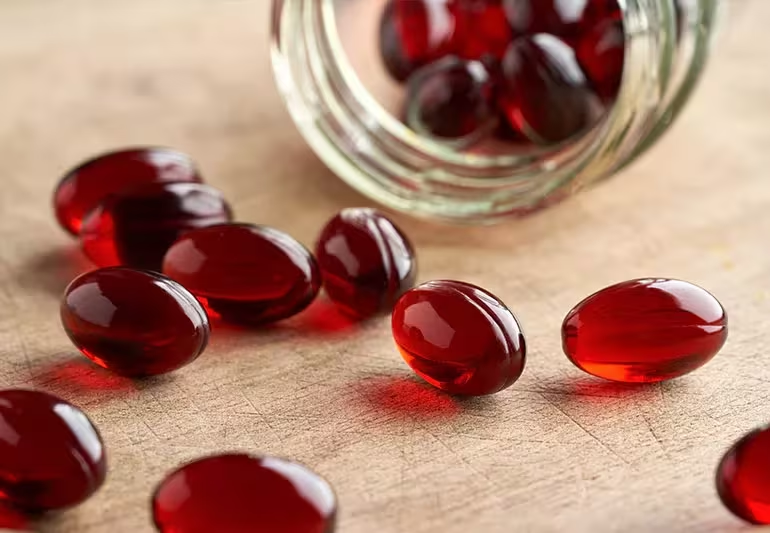
You know you need omega-3s. You’ve heard about the heart health benefits, the brain support, the anti-inflammatory effects. So you head to the supplement aisle and see two options: fish oil and krill oil. Both promise omega-3s. Both seem similar. But one costs more than the other.
So what’s the difference? And more importantly-which one actually works better for your busy, active lifestyle?
Let’s break down the science, the benefits, and the real-world differences between krill oil and fish oil so you can make an informed choice.
What Are Omega-3s (And Why You Need Them)
Omega-3 fatty acids are essential fats your body can’t produce on its own-you must get them from food or supplements.
The two most important omega-3s:
- EPA (Eicosapentaenoic Acid): Reduces inflammation, supports heart health, improves mood
- DHA (Docosahexaenoic Acid): Critical for brain function, eye health, cognitive performance
Why busy, active adults need omega-3s:
- Heart health: Supports healthy cholesterol and blood pressure
- Brain function: Enhances memory, focus, and mental clarity
- Joint support: Reduces inflammation from exercise and daily activity
- Recovery: Helps muscles recover faster after workouts
- Mood regulation: Supports emotional balance and stress resilience
- Skin health: Reduces inflammation and promotes healthy, youthful skin
The problem:
Most people don’t get enough omega-3s from diet alone. Unless you’re eating fatty fish 3-4 times per week, you’re likely deficient.
Fish Oil: The Traditional Omega-3 Source
Fish oil has been the go-to omega-3 supplement for decades.
What it is:
Oil extracted from fatty fish like salmon, mackerel, sardines, and anchovies.
What it contains:
- EPA and DHA omega-3 fatty acids
- Vitamin E (in some formulas)
- Concentrated doses in supplement form
Benefits of fish oil:
- Proven track record: Decades of research supporting effectiveness
- High EPA/DHA content: Concentrated doses available
- Widely available: Easy to find and generally affordable
- Heart health support: Promotes healthy cardiovascular function
Omega-3 Fish Oil Extreme is specially formulated with concentrated high-potency fish oil, added vitamin E, and concentrated EPA and DHA to help control inflammation levels and support brain, heart, and eye health-making it clear why omega-3 is your new wellness essential.
Drawbacks of traditional fish oil:
- Fishy aftertaste: Burps and unpleasant taste
- Lower absorption: Omega-3s in triglyceride form may be less bioavailable
- Oxidation concerns: Can go rancid if not stored properly
- Potential contaminants: Some fish contain mercury and chemicals (though quality supplements filter these out)
Krill Oil: The Advanced Alternative
Krill oil is extracted from Antarctic krill-tiny, shrimp-like crustaceans.
What makes it different:
The omega-3s in krill oil are bound to phospholipids (instead of triglycerides in fish oil), which may significantly improve absorption and effectiveness.
Key advantages of krill oil:
1. Superior Absorption
The science:
Fatty acids in krill oil are found in phospholipid form. Many experts believe this helps increase absorption and effectiveness compared to the triglyceride form in fish oil.
What this means:
Your body may absorb and use the omega-3s from krill oil more efficiently-meaning you get more benefit from a smaller dose.
2. Contains Astaxanthin
What it is:
A powerful antioxidant that gives krill oil its distinctive red color.
What it does:
- Protects against free radicals: Reduces oxidative stress
- Anti-inflammatory: Supports joint health and recovery
- Skin protection: Provides sun protection and anti-aging benefits
- Preserves the oil: Natural antioxidant prevents rancidity
The benefit:
Most fish oils don’t contain astaxanthin-this is unique to krill oil.
3. No Fishy Aftertaste
The experience:
Krill oil typically doesn’t cause the fishy burps or unpleasant aftertaste associated with fish oil.
Why it matters:
Better compliance. If you don’t dread taking your supplement, you’re more likely to take it consistently-and consistency is what delivers results.
4. Cleaner Source
The advantage:
Antarctic krill are at the bottom of the food chain, so they accumulate fewer contaminants like mercury and PCBs compared to larger fish.
The sustainability:
Krill are one of the most abundant species on Earth, and responsible harvesting practices ensure minimal environmental impact.
The Head-to-Head Comparison
Absorption:
- Krill Oil: Phospholipid form = better absorption
- Fish Oil: Triglyceride form = standard absorption
- Winner: Krill oil
Antioxidant Content:
- Krill Oil: Contains astaxanthin
- Fish Oil: Typically doesn’t (unless added)
- Winner: Krill oil
Taste and Tolerability:
- Krill Oil: No fishy aftertaste
- Fish Oil: Often causes fishy burps
- Winner: Krill oil
EPA/DHA Concentration:
- Krill Oil: Lower concentration per capsule
- Fish Oil: Higher concentration available
- Winner: Fish oil (but krill’s better absorption may compensate)
Price:
- Krill Oil: Generally more expensive
- Fish Oil: More affordable
- Winner: Fish oil
Purity:
- Krill Oil: Cleaner source, fewer contaminants
- Fish Oil: Quality brands filter contaminants effectively
- Winner: Tie (both can be pure with quality brands)
Who Should Choose Krill Oil
Krill oil is ideal if you:
- Want maximum absorption: Phospholipid form delivers better bioavailability
- Hate fishy aftertaste: Krill oil is much more tolerable
- Need antioxidant support: Astaxanthin provides added benefits
- Have sensitive digestion: Easier on the stomach than fish oil
- Are active and need recovery support: Anti-inflammatory benefits for joints and muscles
- Want skin health benefits: Astaxanthin supports skin from within
- Value quality over price: Willing to pay more for superior absorption
Who Should Choose Fish Oil
Fish oil is ideal if you:
- Need high-dose EPA/DHA: Want maximum omega-3 concentration
- Are budget-conscious: More affordable option
- Don’t mind the taste: Can tolerate fishy aftertaste
- Want proven research: Decades of studies on fish oil
- Need specific therapeutic doses: Higher concentrations available
How to Use Omega-3s Effectively
Dosage recommendations:
- General health: 250-500mg combined EPA/DHA daily
- Heart health: 1,000mg combined EPA/DHA daily
- Active adults/athletes: 1,000-2,000mg combined EPA/DHA daily
- Therapeutic use: Up to 3,000mg daily (consult doctor)
Timing:
- Take with meals: Improves absorption and reduces digestive upset
- Consistency matters: Daily use delivers best results
- Morning or evening: Either works-choose what you’ll remember
What to expect:
- Week 1-2: Minimal noticeable changes
- Week 3-4: Improved joint comfort, better recovery
- Week 6-8: Enhanced mental clarity, mood improvements
- 3+ months: Significant cardiovascular and anti-inflammatory benefits
The Bottom Line
Both krill oil and fish oil provide essential omega-3s, but krill oil offers distinct advantages for busy, active adults: superior absorption due to phospholipid form, powerful antioxidant astaxanthin, no fishy aftertaste, and cleaner sourcing.
While fish oil remains a solid, affordable option with proven research, krill oil’s enhanced bioavailability means you may get more benefit from a smaller dose-making it worth the investment for those who value quality and effectiveness.
For active adults juggling work, fitness, and life, krill oil’s better absorption, anti-inflammatory benefits, and easy tolerability make it the smarter choice. When selecting high-quality supplements, choose options that work as hard as you do-your heart, brain, joints, and skin will thank you.
