
Emergencies rarely arrive with a warning. A colleague may collapse at work, a child may suffer a burn, or someone may choke during a meal. In those tense moments, uncertainty can delay action. Basic emergency education helps people understand what to notice, what to do first, and when to call professional responders.
Learning CPR, AED use, and first aid does not turn a student into a medical professional. It can, however, replace panic with a clearer response at home, at work, while travelling, or in public.
Why Emergency Knowledge Matters
Many people want to help but fear making a mistake. Structured learning breaks a stressful event into practical decisions: check for danger, assess the person, contact emergency services, and give suitable care within one’s training.
The American Heart Association’s CPR overview explains that CPR can help maintain blood flow when a person’s heart stops beating. Knowing the purpose of each action makes the steps easier to remember. It also shows why a calm, prompt response is more useful than standing back because of uncertainty.
Three Skills That Work Together
CPR, AED awareness, and first aid address different parts of emergency response.
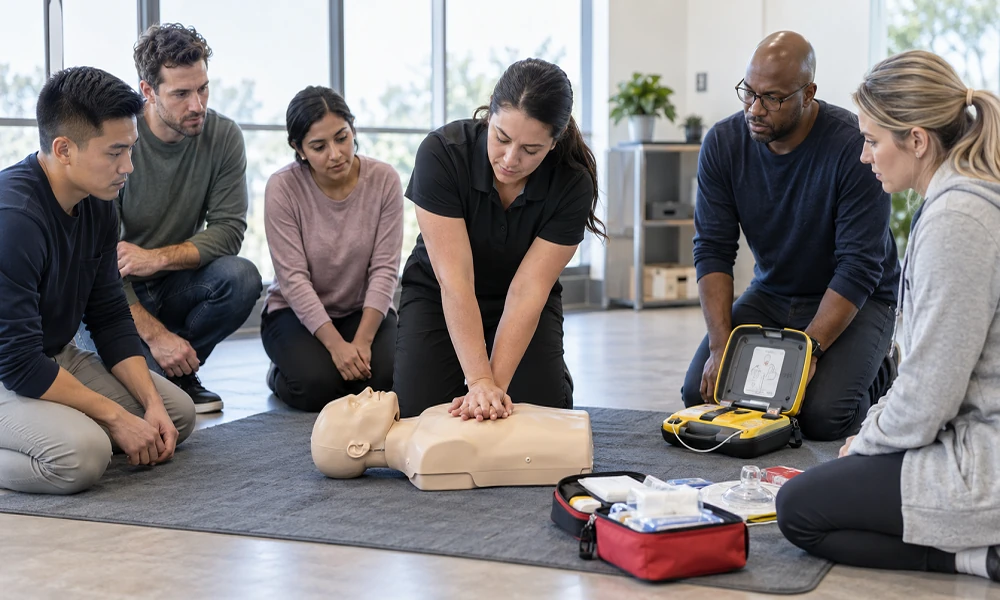
CPR supports circulation when a person is unresponsive and not breathing normally. A course should help learners recognize a possible cardiac arrest, contact emergency services, begin appropriate compressions, and follow current guidance.
An automated external defibrillator, or AED, analyzes the heart’s rhythm and gives clear prompts. It advises a shock only when needed. Learning what the device does can reduce fear. Students should become familiar with turning it on, placing the pads as shown, following its instructions, and keeping others clear during analysis or a shock.
First aid covers a wider range of incidents, including bleeding, burns, choking, fainting, sprains, seizures, and sudden illness. Good training also stresses scene safety, personal protection, careful observation, and timely contact with emergency services.
Together, these subjects create a useful foundation. Learners develop a practical way to assess common emergencies and respond in a sensible order.
The Value of Starting Online
A CPR AED and first aid free course can offer an accessible starting point without travel or a fixed classroom schedule. Learners can study at a comfortable pace, pause when a topic needs more attention, and revisit key sections.
This flexibility can suit parents, caregivers, teachers, students, volunteers, and employees. It may also help someone decide whether to pursue further instruction or a formal credential.
Before starting, learners should identify their goal. General knowledge may support personal preparedness. A workplace, licensing body, school, or professional organization may require a specific certification, assessment, or hands-on session. Requirements vary, so students should check with the relevant organization.
How to Learn More Effectively
Online learning works best when the student stays active. Take short notes in plain language. After each section, explain the main idea without looking at the screen. Review the order of action for different situations.
Scenario-based thinking is valuable too. Ask: Is the area safe? Is the person responsive? Are they breathing normally? Who is calling emergency services? Where is the nearest AED or first-aid kit? These questions turn information into a mental routine.
The first-aid guidance from Ready.gov encourages people to take training and keep suitable supplies available. Knowledge works best with preparation. Families and workplaces should know where emergency supplies are stored and check them periodically.
Know What Online Learning Cannot Replace.
Digital lessons can explain principles, demonstrate sequences, and improve awareness. They cannot fully reproduce supervised practice. Compressing a training manikin, rehearsing pad placement, or receiving instructor feedback may reveal mistakes that are hard to notice alone.
No course removes the need to contact emergency services. Real incidents differ, and responders must follow local instructions and act within their training. Skills should be refreshed because guidance can change and unused knowledge can fade.
Frequently Asked Questions
Can a beginner take an online emergency-care course?
Yes. Introductory learning presents core ideas in a clear order. Beginners should move slowly, review difficult sections, and seek hands-on practice when possible.
Does online completion satisfy workplace requirements?
Not always. Employers and regulators may require an accepted provider, practical assessment, or particular certificate. Confirm the exact requirement before relying on a course for compliance.
How often should these skills be reviewed?
Regular review is wise, especially when the knowledge is rarely used. Follow the renewal schedule attached to any formal credential.
Build Readiness One Lesson at a Time
Emergency confidence grows through understanding, review, and practice. FirstAidFreeCourse offers a convenient place to begin exploring essential response skills. Visit the website, study each topic carefully, and use that foundation to make informed choices about further training and hands-on practice.
