

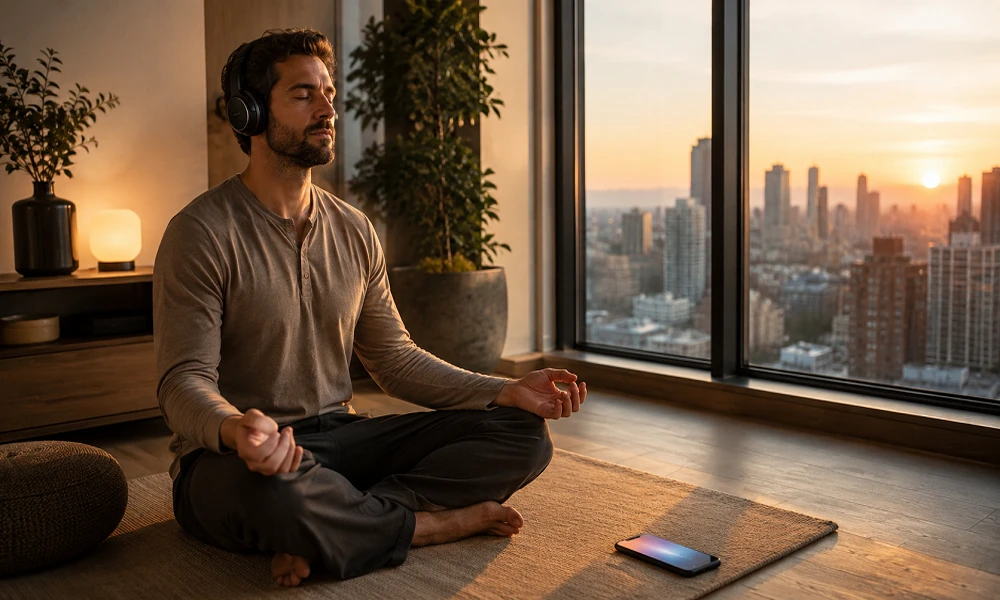
Meditation can look demanding from the outside. A quiet room, perfect posture, and an empty mind may seem like requirements. They are not. A beginner only needs a few minutes, a reasonably comfortable position, and a willingness to notice what is happening.
Guidance can make that first step easier. A teacher’s voice gives the session a beginning, an anchor, and a clear ending. Instead of wondering what to do next, the listener can follow one instruction at a time.
What Guidance Changes
An unguided practice asks the practitioner to choose an anchor, manage the time, and respond to distraction alone. A guided session provides that structure. The teacher may direct attention toward breathing, physical sensations, sounds, a visual image, or a repeated phrase.
This does not mean the voice should hold attention perfectly. Thoughts will still appear. The purpose of guidance is to offer a friendly place to return, not to prevent the mind from moving.
Begin With the Moment You Actually Have
The best starting point is not the longest available class. It is the one that fits a real opening in the day. Three minutes before breakfast may be more repeatable than twenty minutes at an imagined quiet hour. A short session after closing a laptop can create a transition out of work. An evening body scan may suit someone who finds sitting upright uncomfortable at night.
The NHS beginner’s meditation guide notes that no specialist equipment is required and that each person needs to find a routine that works. Comfort, support, and regularity matter more than creating an impressive setting.

Choose a Practice by Its Anchor
Beginners often benefit from choosing one simple anchor. Breath-focused sessions follow the natural movement of inhaling and exhaling. Body scans move attention gradually through physical sensations. Sound practices listen closely to music, tones, or the surrounding room. Loving-kindness sessions use quiet phrases to cultivate warmth toward oneself and others.
Try one style several times before deciding whether it fits. Repetition reduces that novelty and reveals whether the pace, teacher, and anchor feel supportive.
A library of guided meditation classes can make this exploration more flexible. Op e n brings meditation together with breathwork, movement, music, and sound, allowing a beginner to select an experience that suits the time, energy, and setting of the day.
Match the Length to Your Energy
Duration is not a measure of seriousness. On a focused morning, ten or fifteen minutes may feel natural. During a crowded afternoon, a three-minute reset may be enough. When energy is low, a reclining practice may be more approachable than a seated one.
Create a “minimum practice” that is easy to keep-perhaps one short session three days a week. Longer classes can remain optional. This protects consistency without turning meditation into another standard to fail.
It also helps to use the same cue: after coffee, before lunch, when work ends, or once the bedroom lights are dimmed. A cue gives the practice a home in the day.
Expect Attention to Wander
A wandering mind is not a failed session. The NHS explains that even experienced practitioners become distracted; the practice is noticing and returning. If attention moves ten times, there are ten opportunities to begin again.
Silently name “thinking,” feel the next breath, or reconnect with the teacher’s voice. There is no need to argue with a thought or force it away. Over time, this repeated return can make distraction feel less personal.

Evaluate the Fit After a Week
Repeat one class for several days, then ask practical questions. Was the voice easy to follow? Did the pace leave enough silence? Was the posture comfortable? Did the session fit its chosen time? Would a different anchor or length make it easier to return tomorrow?
Avoid judging only by whether the session created calm. Meditation may reveal restlessness, fatigue, or emotion that was already present. The NCCIH overview of meditation and mindfulness notes that research findings vary and that these practices should not replace conventional care. Anyone who experiences persistent distress should pause and seek appropriate professional support.
Let the Practice Fit the Person
A sustainable beginning is simple: choose one anchor, select a realistic length, attach the session to a familiar cue, and return without self-criticism. The right practice is not the one that looks most disciplined. It is the one that a person can meet with honesty and repeat.
Op e n offers a range of on-demand experiences for different moments and ways of practicing. Explore the collection, choose one approachable session, and let a few attentive minutes become part of the day you already have.
