

Most patients return to a fully normal diet somewhere between three and six months after implant surgery, once the final crown or bridge is in place. The soft-food phase itself is much shorter, usually one to two weeks. The gap between those two numbers confuses people, and it is the main thing worth understanding before you plan your meals. Post-operative instructions vary by case, so follow whatever your own surgeon gives you, and practices that place implants routinely, including Stubbs Dental, will provide a written diet timeline specific to your procedure.
Why does it take months to eat normally again?
Because the implant has to fuse to the jawbone before it can take full bite force. That process, called osseointegration, is bone growing directly against the titanium surface, and it typically takes three to six months. Until it finishes, heavy chewing pressure on the implant site risks disrupting the bond.
Comfort returns long before strength does. You will feel fine eating most things weeks before the implant is actually ready to handle them, which is why patients tend to push the timeline faster than they should.
What can you eat in the first 48 hours?
Cool liquids and very soft foods, nothing hot, and nothing through a straw. Suction can disturb the blood clot at the surgical site.
Reasonable options: yogurt, smoothies eaten with a spoon, applesauce, broth once it has cooled, protein shakes, pudding, cottage cheese, and lukewarm scrambled eggs. Heat increases bleeding and swelling in the first day or two, so coffee and soup are worth postponing.
Swelling normally peaks around 48 to 72 hours and then declines. Skip alcohol entirely while taking pain medication, and avoid smoking, which meaningfully raises implant failure risk and slows soft tissue healing.
What does the first two weeks look like?
Soft foods that require minimal chewing, with all chewing done on the opposite side of your mouth. By day three or four most patients are managing mashed potatoes, pasta cooked soft, flaked fish, ground meat in sauce, oatmeal, ripe bananas, and well-cooked vegetables.
Getting enough protein matters more than people expect during this stretch, since healing tissue demands it and a soft diet drifts easily toward carbohydrates. Sutures, if you have them, usually come out between seven and fourteen days.
Rinsing with warm salt water after meals, typically starting 24 hours post-surgery, keeps food debris off the site. Do not swish forcefully.
When can you chew on the implant side again?
Light chewing on that side generally resumes around two to six weeks, depending on how the surgery went and what your surgeon advises. Full bite force on the implant waits until the permanent restoration is attached.
That sequencing matters. An uncovered, healing implant has a cap on it, not a tooth. There is nothing there designed to chew with. Once the abutment and crown are placed at the three to six month mark, the restoration is built to handle normal function and the restrictions lift.
Does same-day teeth or All-on-4 change the timeline?
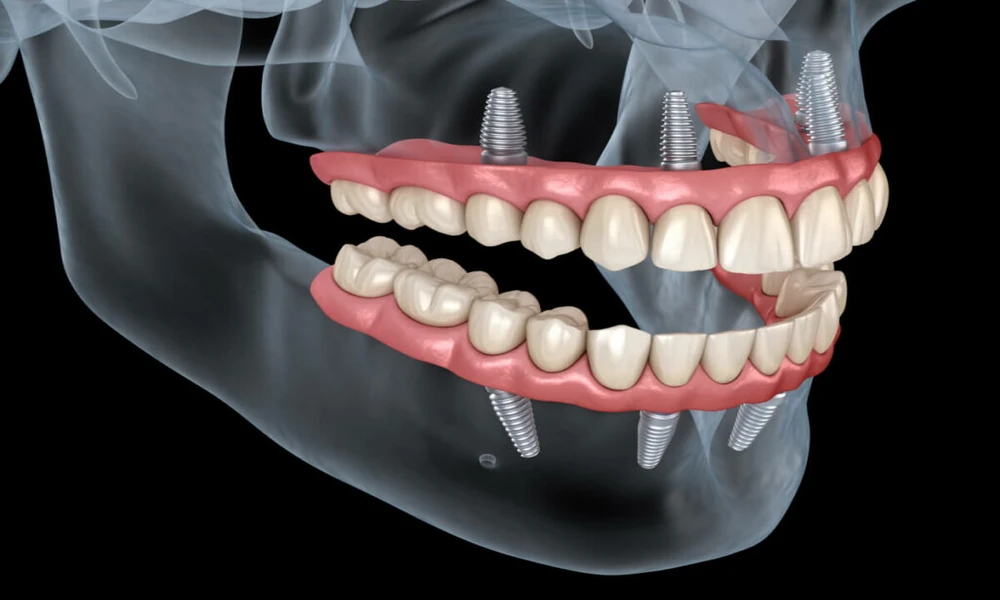
It changes what you can eat, not how long you wait. Full-arch protocols like All-on-4 attach a temporary fixed bridge the day of surgery, which lets you eat immediately in a way single-implant patients cannot.
That temporary is a provisional, usually acrylic, and it is not built for hard chewing. Most surgeons ask for a soft diet for the entire osseointegration period, commonly three months, before the final bridge goes on. Patients who crack a provisional by eating a steak at week six add weeks and repair costs to their own treatment.
How much do bone grafts and sinus lifts extend the restrictions?
Considerably. Bone grafting adds roughly four to nine months to the overall timeline before the implant can even be placed, and the diet restrictions repeat for the grafting surgery itself.
Sinus lift patients get an extra set of rules beyond food: no nose blowing, sneeze with your mouth open, and avoid anything that creates pressure changes in the sinus for several weeks.
What should you avoid throughout healing?
A few categories cause most of the problems:
- Small hard particles like nuts, seeds, popcorn kernels, and chips, which lodge in the site
- Sticky foods such as caramel and taffy that can pull at healing tissue
- Crusty bread, raw carrots, apples, and anything requiring a forceful bite
- Very hot food and drink during the first two to three days
- Smoking and tobacco, which raise failure risk throughout healing
When should you call your dentist instead of waiting?
Pain that increases after day three, swelling that worsens past 72 hours, fever, persistent bleeding, a bad taste or discharge, or any sense of movement in the implant all warrant a call rather than a wait.
Ask for the diet timeline in writing at your consultation, since it differs between a single implant and a full-arch case. A practice like Stubbs Dental should be able to tell you exactly when each restriction lifts for your specific treatment plan.
