

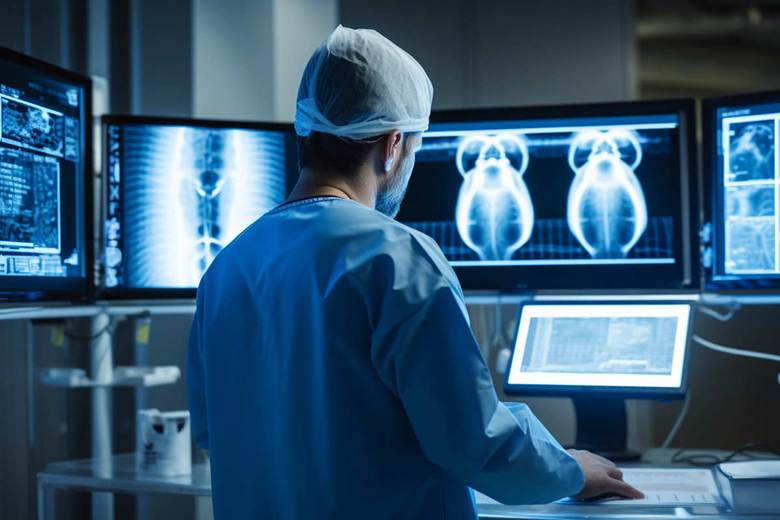
The way medical experts capture and analyze Xray pictures has been transformed by digital radiography (DR). Unlike conventional film-based imaging, digital systems provide quick image acquisition, greater definition, and effective data management. Instant image preview, simple sharing across departments, and decreased radiation exposure made digital radiography’s underlying technology a go-to option in contemporary medical imaging.
Advanced technologies that maximize image accuracy and display performance help to enable this switch to digital imaging. One such answer is QUBYX software created expressly to improve the quality of diagnostic images. The providers guarantee that monitors utilized in digital radiography retain DICOM compliance and correct grayscale calibration—crucial for interpreting minute features in an X-ray image. Developed by experts in digital imaging and display technologies, the program assists radiologists and technicians in trusting what they see on screen.
How Digital Radiography Functions?
Digital radiography essentially transforms X-ray energy into electronic signals using a digital detection system. Flat-panel or charge-coupled device (CCD) based, these sensors immediately record the image and send it for computer analysis. This removes the need for film development and greatly lowers waiting periods for both providers and patients.
Usually consisting of an Xray source, digital detector, picture processing software, and a high-resolution monitor, digital radiography systems. The program highlights major anatomical characteristics by modifying contrast, brightness, and sharpness after an image is taken. To help in diagnosis, radiologists may then zoom, rotate, or improve areas of the image.
Advantages Over Conventional Radiography
DR offers several benefits. First, the program’s capacity to correct image quality after capture lowers the need of retakes caused by exposure errors. Second, DR offers a more streamlined workflow: images may be quickly seen and sent electronically to other departments or experts. Third, digital detectors’ greater sensitivity helps to reduce patient exposure to radiation.
Furthermore, digital archives simplify patient picture storage and retrieval, hence improving long-term monitoring and comparison for chronic diseases or follow-ups.

The Role of Display Calibration
Image accuracy goes beyond capture; it spans how the picture is shown. When a radiologist views a diagnosis picture on a monitor that has not been calibrated, it is easily possible to overlook small fractures, lesions or other anomalies. This is where hardware and software solutions that ensure displays that are used in digital radiography setting are categorized to be measuring up to strict medical standards are implemented. Such innovative solutions assist medical institutions that put priority on picture precision, as they allow calibrating DICOM settings, controlling the displays remotely, and performing real-time quality checks.
The QUBYX Shop supplies professional-level accessories and reliable software to support healthcare professionals to achieve regulatory demands as well as anticipate the requirements in the industry. Such investments have been ensured that radiologists rely on images that they are reading, thus speeding up diagnoses and improving outcomes and confidence in clinical decisions.
Final Thoughts
Digital radiography has transformed medical imaging offering better speed, clarity and efficiency than any other technique. Yet to realize its potential, the healthcare facilities must ensure they have optimized each point along the imaging chain, including the detector to the display. By means of advanced hardware and software solutions, specialists are able to preserve the quality of the images, follow the industrial standards and most importantly – take care of more patients.
