

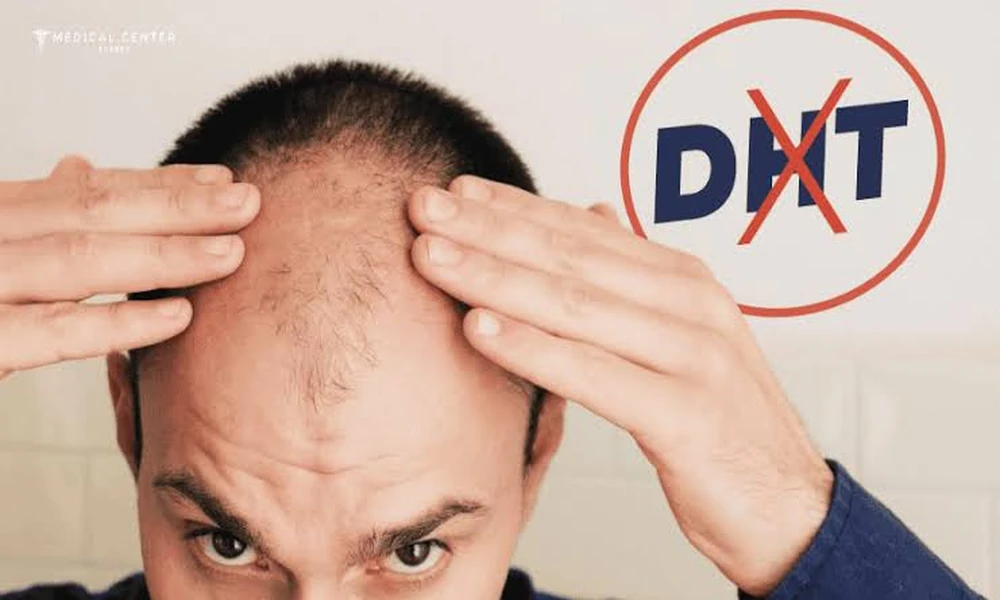
The label does not prove cause fit
Dihydrotestosterone, or DHT, is discussed in relation to androgenetic hair loss because genetically susceptible follicles can gradually miniaturize. That broad mechanism does not mean every widening part, receding hairline, or period of shedding is driven by the same process. Alopecia areata, telogen effluvium, traction, scalp inflammation, medication effects, nutritional issues, and other causes require different conversations.
The American Academy of Dermatology’s overview of female pattern hair loss stresses the importance of diagnosis because several forms of hair loss can look similar. It also illustrates a useful buying principle: even when pattern loss is likely, treatment choice depends on the person, health context, side effects, and willingness to maintain the regimen.
Before purchasing, write down the evidence for the assumed cause. Is there a clinician’s diagnosis? Is the thinning gradual and patterned, or is the main issue sudden diffuse shedding? Are there symptoms such as scale, pain, redness, or patchy loss? If the only evidence is an advertisement that resembles a photograph, the diagnosis is not settled.
Ask which category the product belongs to
A rinse-off shampoo, a leave-on cosmetic lotion, a supplement, and a licensed drug should not be compared as if they were four strengths of the same item. They have different contact times, evidence standards, risks, directions, and professional oversight. Look for the product’s legal category and authorized claims in Canada. Clinical-sounding packaging does not by itself establish a medicinal indication.
The Green Line collection at Truly You includes pre-shampoo, shampoo, lotion, vial, and kit formats, and its page describes the range in relation to DHT and a trichology program. That information should lead to format questions. Why is a rinse-off step recommended? What does the leave-on step add? Must the products be used together? Which one is intended for the scalp, and which outcomes are cosmetic rather than medical?
Ingredient-level claims also deserve precision. Evidence about an isolated ingredient, studied concentration, or prescription molecule does not automatically transfer to every retail formula that mentions the same pathway. Ask for evidence tied to the exact product and the exact outcome being promised. Be cautious when testimonials, laboratory language, and a list of botanical ingredients are presented as though they equal a controlled clinical result.
Watch the verbs on the label. “Cleanses,” “conditions,” “supports,” “reduces breakage,” “prevents loss,” and “regrows” describe very different levels of outcome. Compare the front-panel promise with the directions, warnings, and product category on the rest of the package. If the strongest claim appears only in advertising while the label uses much narrower language, make the purchasing decision from the narrower statement.
Tolerability and routine burden are buying criteria
A product that cannot be used comfortably and consistently is a poor fit, regardless of the label. Read fragrance, allergen, and application information. Ask what to do if itching, burning, redness, or flaking appears, and whether the product conflicts with another scalp treatment. “Tingling means it is working” is not an adequate safety instruction.
Map the routine to real life. A pre-shampoo adds time before washing. A specialty cleanser may change how often a person washes. A leave-on lotion can affect styling, headwear, hair systems, or colour appointments. A supplement creates a different set of health and interaction questions. Price the full routine over several months, including companion items, rather than comparing only the first bottle.
Anyone who is pregnant, breastfeeding, managing a health condition, or using prescription medication should discuss appropriate products with a qualified health professional. The same applies to teenagers and to people treating an inflamed or damaged scalp. “Natural” describes origin, not universal safety.
Testing belongs to a defined clinical question
Some shoppers jump from a DHT label to broad panels of laboratory tests. Testing is useful when a clinician or qualified provider can explain the question, the interpretation, and how the result would alter care. It is less useful when a package is ordered simply because hair loss is frightening.
Truly You outlines several hair and blood analysis options and recommends discussing appropriate tests with its trichologist. A buyer should ask who orders or collects the sample, which laboratory performs the analysis, who reviews the result, and when a family physician or dermatologist needs to be involved. A commercial service should not replace appropriate medical investigation.
Set a review plan before starting anything. Use consistent photographs, record scalp symptoms, note other product changes, and define a date to reassess with the responsible professional in a documented visit. The plan should also name stop conditions. Persistent irritation, rapid progression, new patches, pain, or other health symptoms should move the decision back toward medical evaluation.
A careful DHT-blocker purchase is therefore less about finding the strongest wording and more about completing a sentence: “For this established problem, this specific category has this limited job, will be used this way, and will be reviewed at this time.” Keep the packaging and written directions for that later review. If the sentence cannot be completed, assessment is a better next purchase than another bottle.
